Project 01 Computer Vision · Hardware
SkyGuard
Passive, low-cost drone detection: a fine-tuned YOLO model watches the sky, and an FPV drone goes where the fixed camera can’t.
Overview
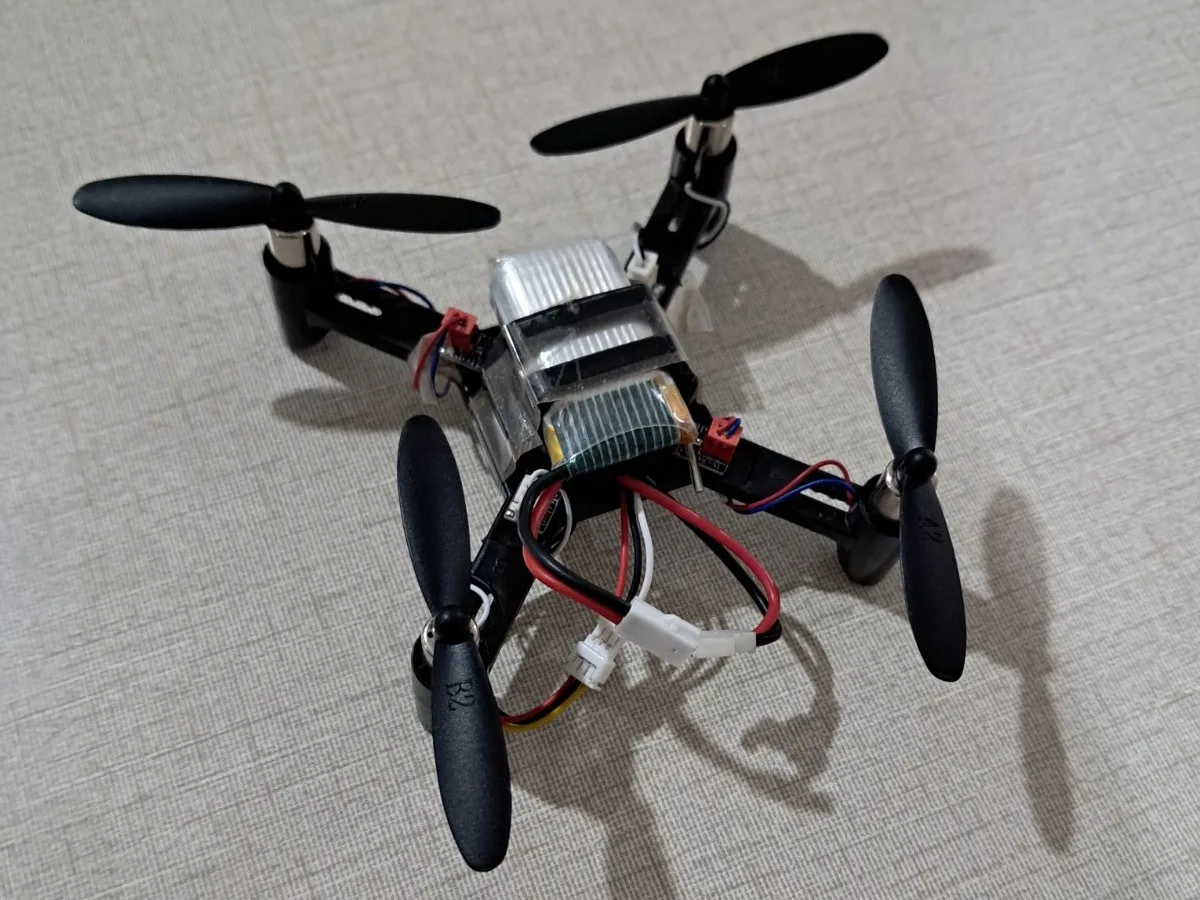
SkyGuard is a drone-detection system in two parts: a fixed optical detector running a fine-tuned YOLO model with a real-time monitoring interface, and a low-cost FPV surveillance drone that detects drones in its vicinity and alerts the operator.
Because the drone is portable, it can be deployed quickly in very different environments, which makes it a natural complement to the fixed station.
The problem
The usual answer to rogue drones is radar, and radar is heavy, expensive and loud: it emits a detectable RF signature, and it struggles with small plastic drones because of their low radar cross-section.
SkyGuard asks whether a camera and a well-tuned model can do the job more cheaply, without broadcasting the operator’s position.
How it works
- Optical, not radio. Detection runs on camera frames, so the whole system is completely RF-silent: there is nothing to pick up.
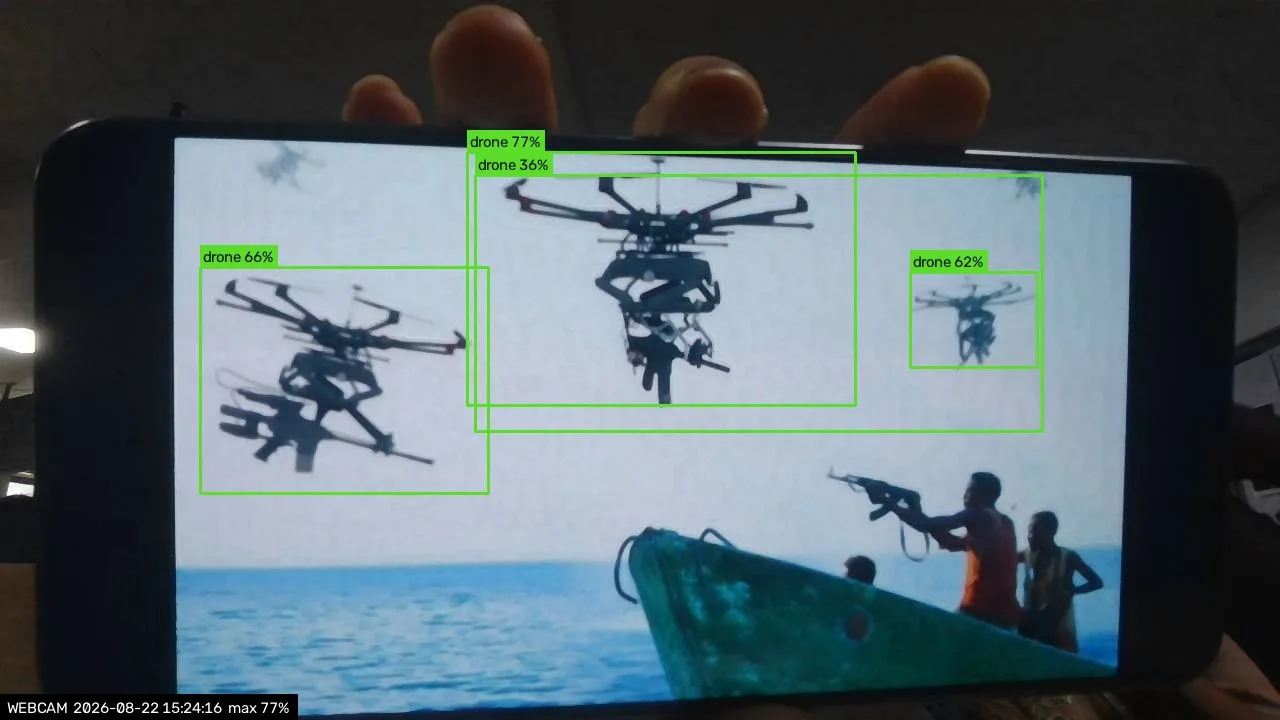
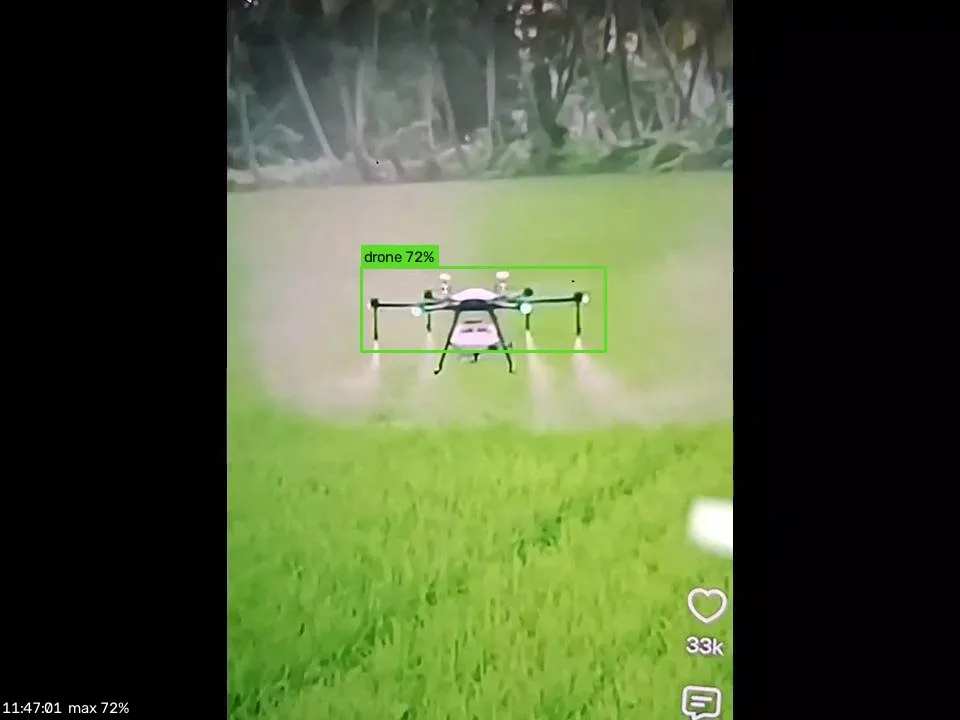
- A tuned YOLO model. I fine-tuned the YOLO architecture and brought in more advanced object-detection techniques to push accuracy up. The same model instantly tells drones apart from birds.
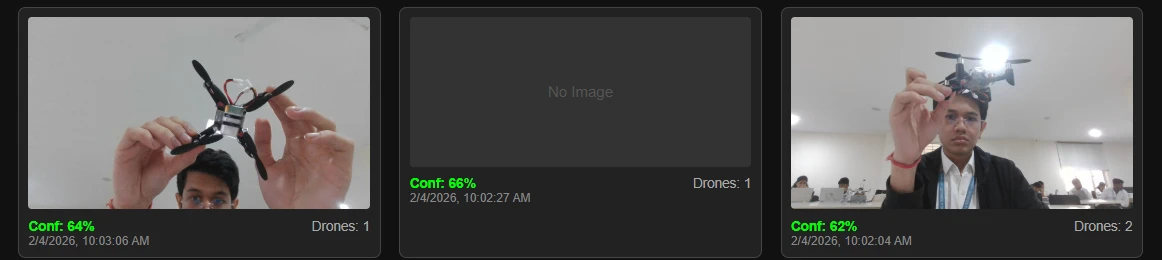
- An operator-first interface. A real-time UI tracks detections and gives operators direct visual verification of a payload, instead of a blip on a screen.
- A drone to find drones. I assembled a low-cost FPV surveillance drone that detects drones nearby and alerts the user, taking the same job into the air.
Key features
-
01
RF-silent
Passive optical detection that emits no radio signature.
-
02
Drone vs Disturbance
YOLO separates drones from birds in real time.
-
03
Live tracking
A real-time interface for monitoring the airspace.
-
04
Visual verification
Operators see the payload itself through an instant email, not just a contact.
-
05
FPV companion
A low-cost drone that’s fast to deploy anywhere.
-
06
Light & cheap
Far lighter and more portable than a radar installation.
Challenges & what I learned
Small plastic drones are hard for radar, and not much easier for a camera at a distance, where a handful of pixels has to separate a quadcopter from a bird. That is where most of the model-tuning effort goes.
Building the drone alongside the software also meant designing the whole system, not just a model: detection only matters if an operator can see it and act on it quickly.
Challenge 1: the model was too heavy. It needed to run on a small device that could one day ride on the drone itself. So I lowered the resolution of the frames it scans, and when a detection comes back with low confidence, that region is cropped from the full-quality frame and checked again by the model.
Challenge 2: the alerts went nowhere. They only appeared on the computer running the detection. Now, as soon as a high-confidence detection comes in, the system emails the person in charge with the detection image, so they can confirm it is a drone and see what it is carrying.
What’s next
Linking the fixed station and the FPV drone into a single operator view, and running the model on an edge device carried by the drone itself.
07 — Gallery
In pictures.